Extension

Written by Dr Sheila Strover on March 14, 2025

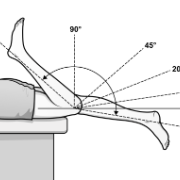
Extension means 'straightening'. Knee extension is to straighten the knee by actively contracting the extensor muscles or by positioning the body to allow passive extension. Page updated June 2024 by Dr Sheila Strover (Clinical Editor)

range of motion

A normal range of motion (ROM) at the knee includes flexion, extension and a small amount of hyperextension. When the knee is straight it is said to be extended. 

Full extension of the knee is generally quoted as 0 degrees but may normally be as much as -6 degrees, which is very slightly bent backwards.

Is it important to regain full knee extension?

After injury or surgery it is more important to regain full extension of the knee than it is to regain full flexion.

What causes knee extension loss?

There may be a number of reasons why one struggles to regain knee extension after a knee insult:

"....Loss of full ROM at the knee joint can have detrimental effects on the function of the entire lower extremity..[causing] altered gait pattern affecting the ankle and hip, inability to attain the closed packed position of the knee, and difficulty running and jumping..."

Back to top

Active extension exercises

Active extension exercises rely mostly on the quads muscles, but these muscles often become inhibited after knee injury or surgery, and it may take time to get the muscle to start triggering.

Usually an extension exercise regime begins with 'short arc extensions' from a seated position.

Back to top

What is passive extension?

Passive extension exercises, such as 'prone hangs' use gravity to help regain extension.

A 'drop-out cast' allows the clinician to gradually improve extension within a plaster-of-Paris that has been windowed to allow serial wedges to be placed under the heel.

Back to top

Forum discussions

Back to top