What does autologous chondrocyte implantation (ACI) mean?
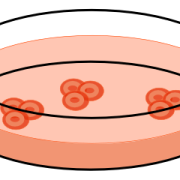
Autologous means from a person into the same person - where cells from the patient are manipulated in a laboratory and then transplanted back into the same person. A chondrocyte is a cartilage cell.
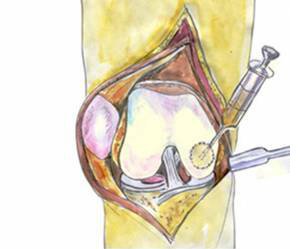
In the ACI procedure, a healthy cartilage sample is harvested from a relatively unimportant part of the same joint, and the cells or chondrocytes are separated, expanded in number in a laboratory, and injected back into the knee behind a membrane that has been sewn over the damaged area to contain the new cells.
ACI is a mainstream surgical procedure for localised full-thickness cartilage defects of the knee.
...."ACI is a two-stage procedure, beginning with arthroscopic....biopsy to harvest approximately 200 to 300 mg of cartilage....The cryopreserved cells are thawed and expanded to the cell population needed for the second-stage open ACI technique...."
Stages include "....identify all associated abnormalities....harvest cartilage tissue from the non-weight-bearing area....parapatellar arthrotomy [to] expose the lesion....Debride all fissured and unstable articular cartilage....sew....the membrane patch....Gently deliver the cells and fill the defect...."
When is ACI indicated in cartilage repair?
ACI is indicated for focal cartilage defects, where most of the rest of the cartilage covering is normal.
Because joint cartilage usually contains only a small number of cartilage cells relative to the large volume of surrounding matrix material, this procedure allows expansion of the relative number of cells proportional to the matrix when the sample is injected back behind the membrane.hese defects require surgical treatment. Moreover, if cartilage defects are left untreated, the damage progresses leading to osteoarthritis...."
"....Focal cartilage defects can cause symptoms such as pain, swelling, stiffness, giving way, or locking of the knee affecting quality of life. As cartilage has a very limited ability to repair itself, these defects require surgical treatment. Moreover, if cartilage defects are left untreated, the damage progresses leading to osteoarthritis...."
Repair tissue ranges "...from predominantly hyaline (22% of biopsy specimens), through mixed (48%), to predominantly fibrocartilage (30% of specimens)...."
Protection of ACI graft area after surgery
Because the graft area and the cells are very fragile for some weeks, the patient has to be extremely careful to keep weight off the graft area until the cells have consolidated into true joint surface.
"....most rehabilitation protocols for third-generation ACI initiate CPM within 24 hours postoperatively and allow partial WB immediately following surgery with progression to full WB within 12 weeks. ...."
Other relevant links -
Forum discussions
- Does BUPA cover MACI/ACI surgery - Patients in the UK discuss insurance for ACI surgery, but then the conversation branches out to other countries.