Knee arthrofibrosis can be an extremely frustrating and debilitating condition.
Arthrofibrosis is associated with a loss of mobility in flexion, extension or both. This loss of motion can create a cascade of other problems that can manifest itself clinically in several different ways, as Dr. Noyes has discussed in his Course on arthrofibrosis.
It is important to understand the principles of rehabilitation for arthrofibrosis and also to understand that they are very interdependent.
- In the intial phases of the disease and in the postoperative period, inflammation and joint swelling typically limit motion and contribute to further scarring. If this is not treated in appropriate and timely fashion, this can lead to permanent motion loss. Decreasing swelling and preventing inflammation is essential to maintaining and increasing motion.
- Weight bearing is also another important variable. When the knee is loaded by early weight bearing activities or aggressive strengthening, recovery from an inflammatory process will only be delayed or exacerbated.
If you have been diagnosed with this condition, rehabilitation for it - whether this be post-operative or non-surgical - should be approached cautiously and appropriately. The initial goals of rehabilitation are:
- Decrease swelling and prevent further inflammation
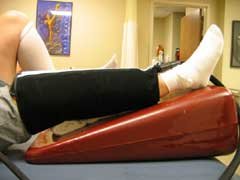
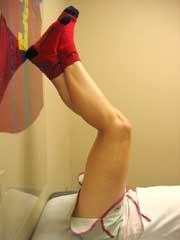
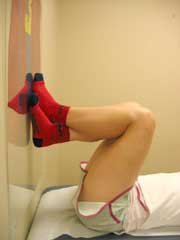
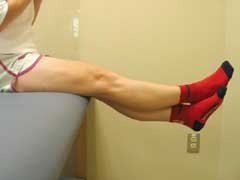
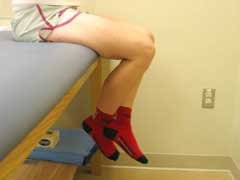
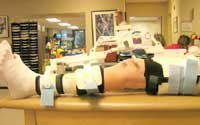
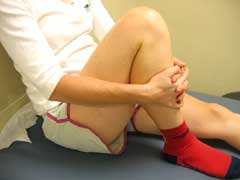
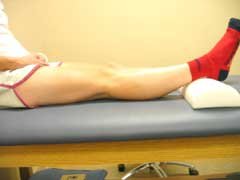
- Maintain and restore mobility
- Maintain and restore patellar mobility
- Maintain quad and hamstring strength